Ball possession is one of the most commonly used statistics to analyse a football match. Often, during half-time or while a player receives medical attention, the commentator will share this number with supporters: “Team X has 68% ball possession in this game!” It is interesting to know who dominates the ball throughout a match, however this data is usually too shallow on its own.
It is common to see teams with over 60% possession who are unable to get into the opposition’s box and threaten their opponent. It is equally common to see teams with less than 40% possession who are able to hurt their opponents with quick and efficient counter-attacks.
Therefore, for a more robust analysis of each team’s ball possession it is necessary to understand the areas of the pitch where each team has the ball. To do this, I created a heat map of the offensive actions (passes, dribbles, and shots) of each team. Here is the result:
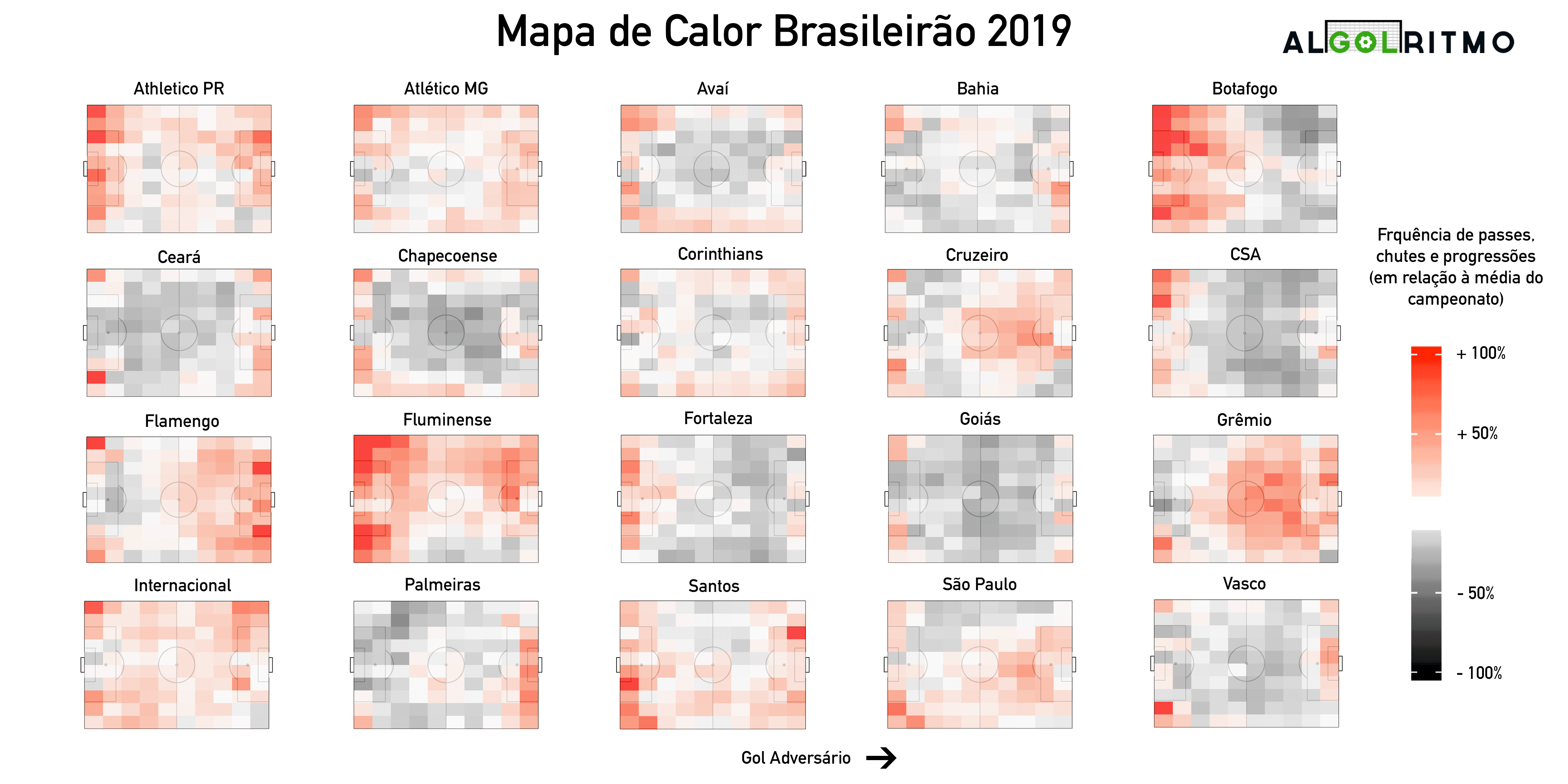
It is important to note that the heat maps above were normalised relative to the league average. In other words, if a team has a red patch in a particular sector, it means they have the ball there more than other teams in the league. Similarly, a dark patch shows that the team has the ball there less compared to other teams. Normalising the heat maps is important because it helps to understand the real differences between teams in the league.
Below I present a “zoom” into each team’s heat map:
Athletico PR
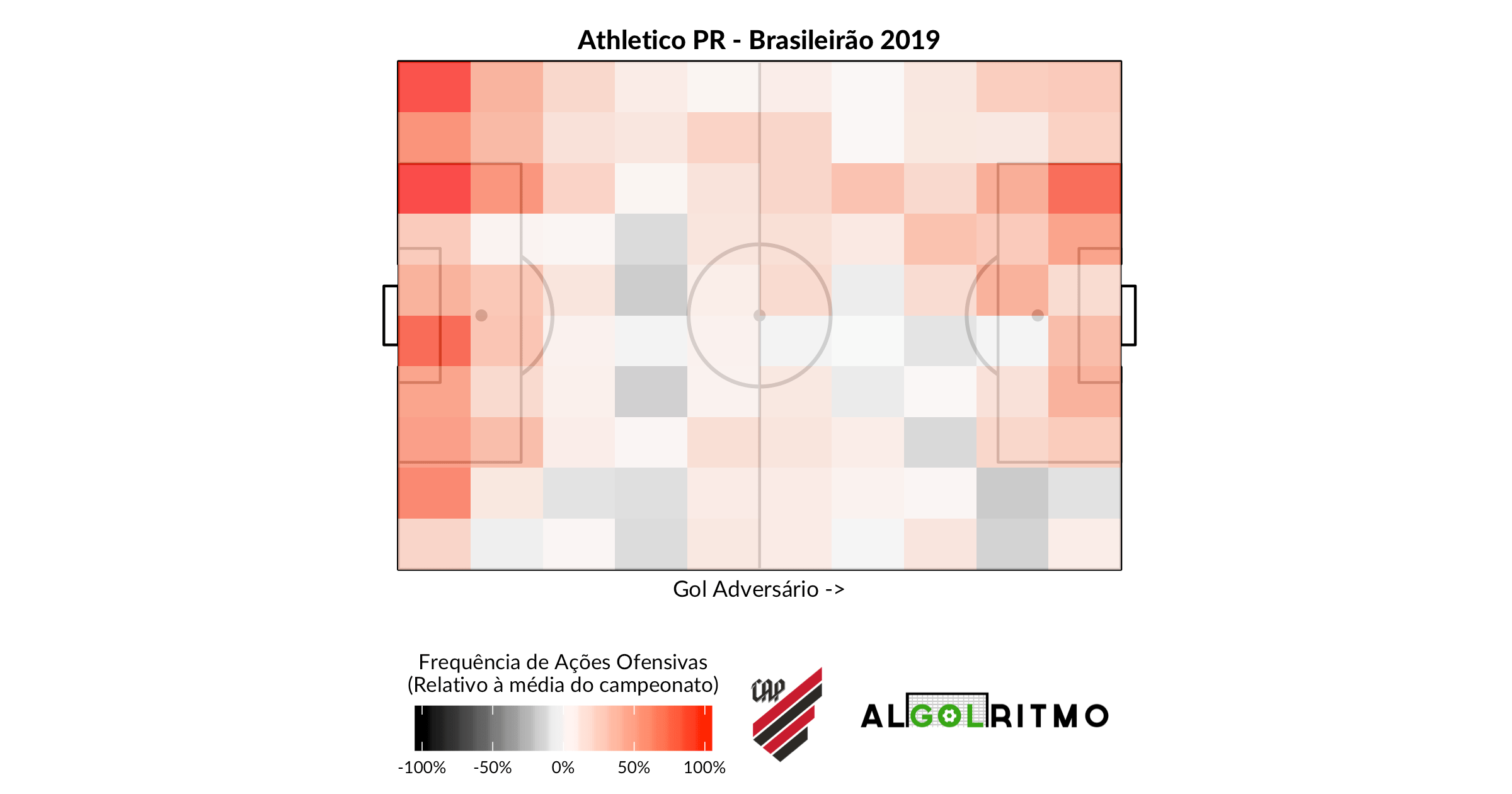
Athletico PR builds play from their defensive half. The ball is heavily present down the left, where Rony operates in attack and is one of the team’s standout players.
Atlético MG
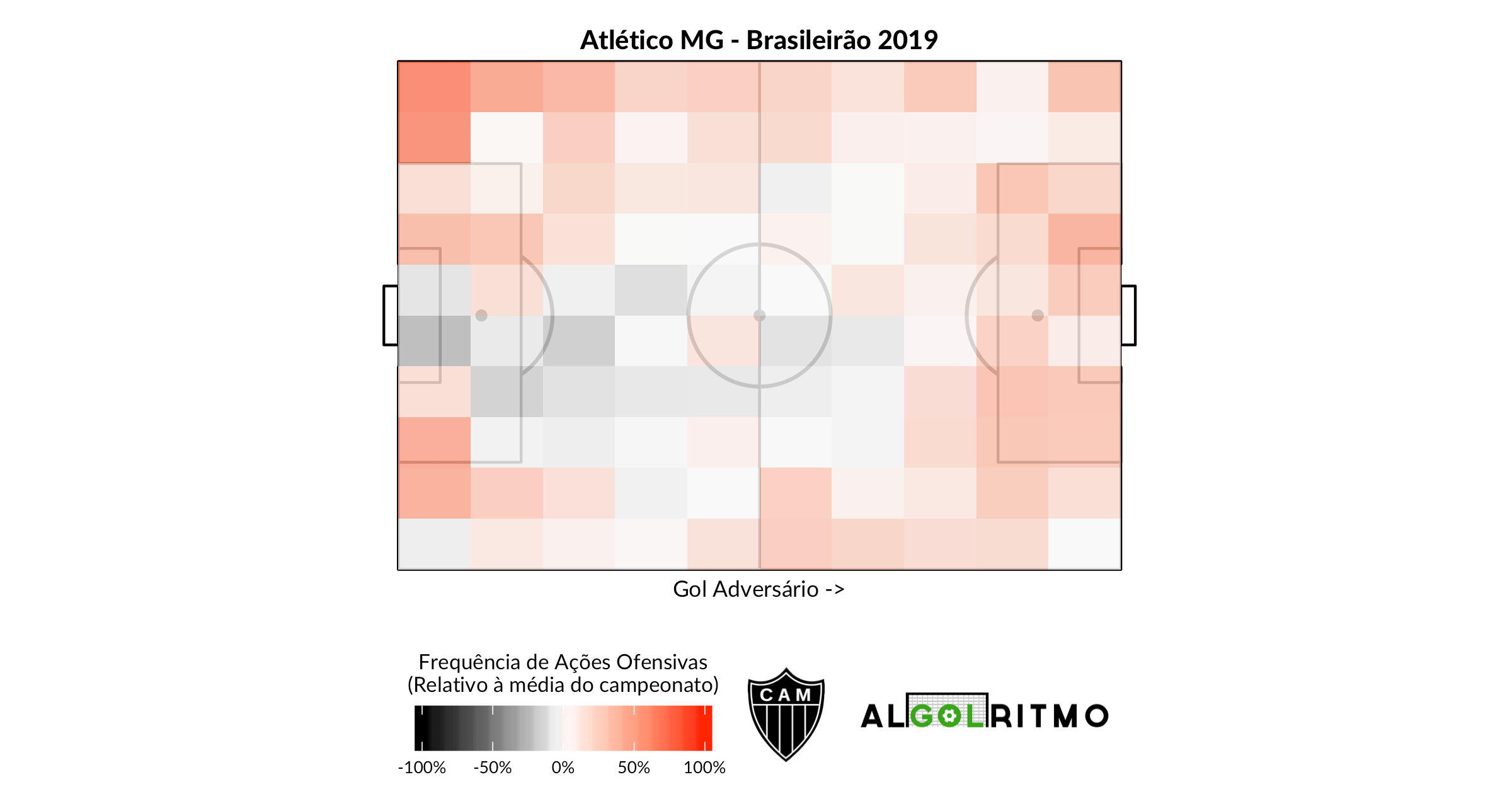
Atlético tends to seek out the flanks, and recently has been exploiting long balls to Otero and Di Santo. The team manages to have the ball inside the box more than the Brasileirão average, but does not convert that possession into many quality chances.
Avaí
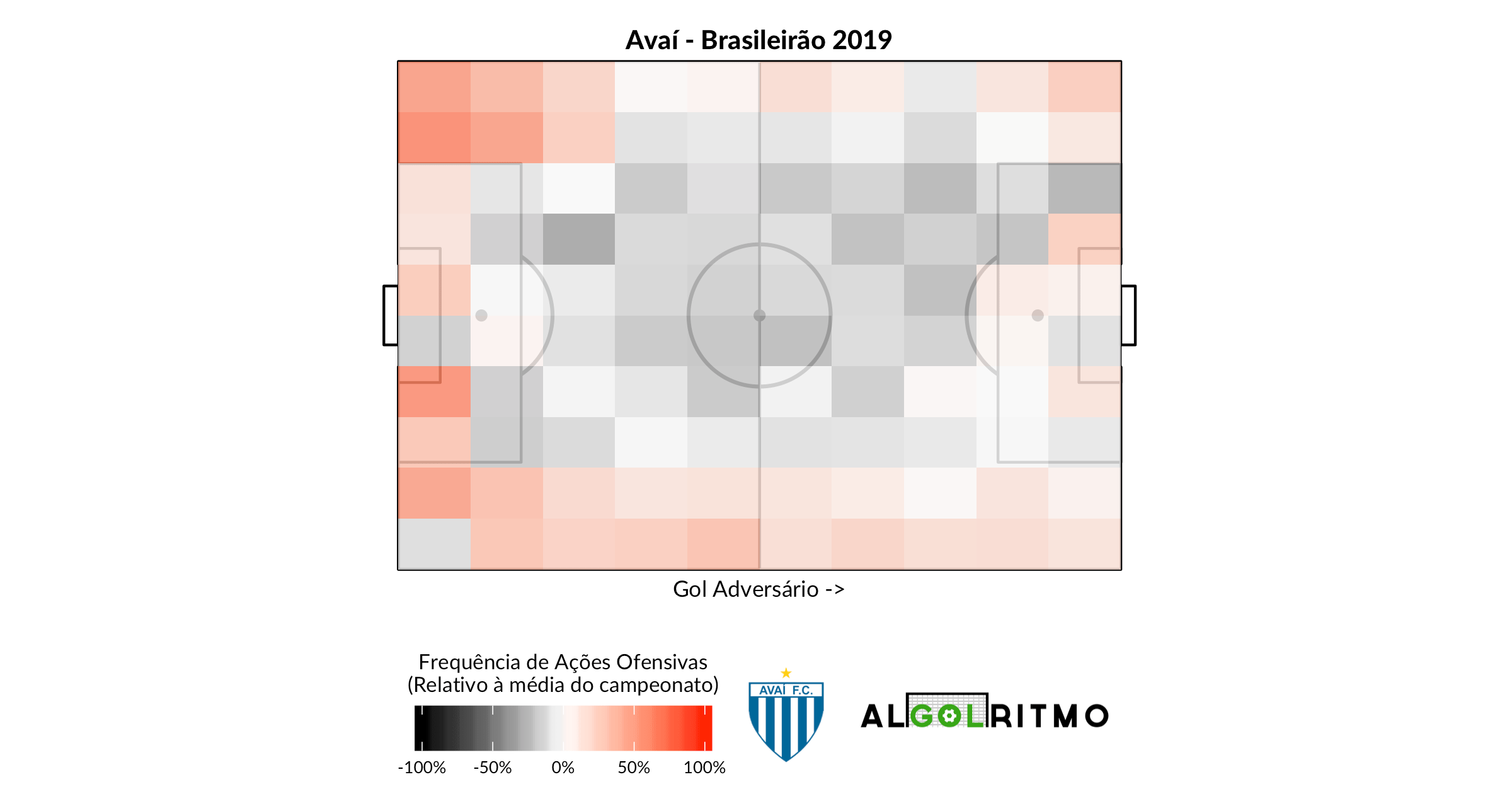
Avaí is another team that seeks to build through the wide areas, especially down the left with Lourenço or Caio Paulista. The team struggles to exploit spaces near the box. That would not be a problem if Avaí knew how to exploit counter-attacks, but that has not been the case so far.
Bahia
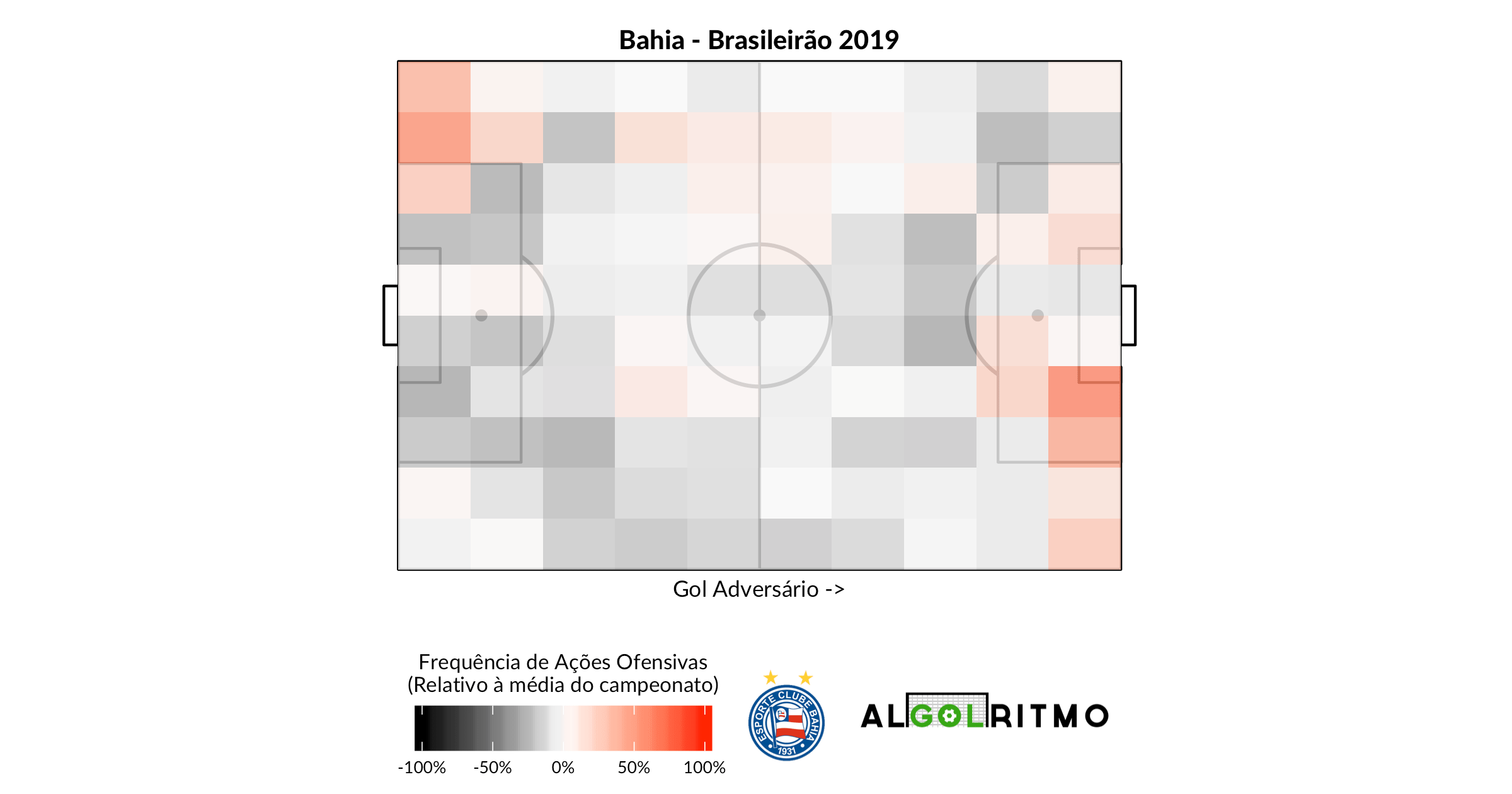
Roger Machado’s Bahia has explored a game with little possession and quick attacks. The team has a “hot” area in attack with Artur Victor down the right wing, who is always heavily involved in the club’s matches.
Botafogo
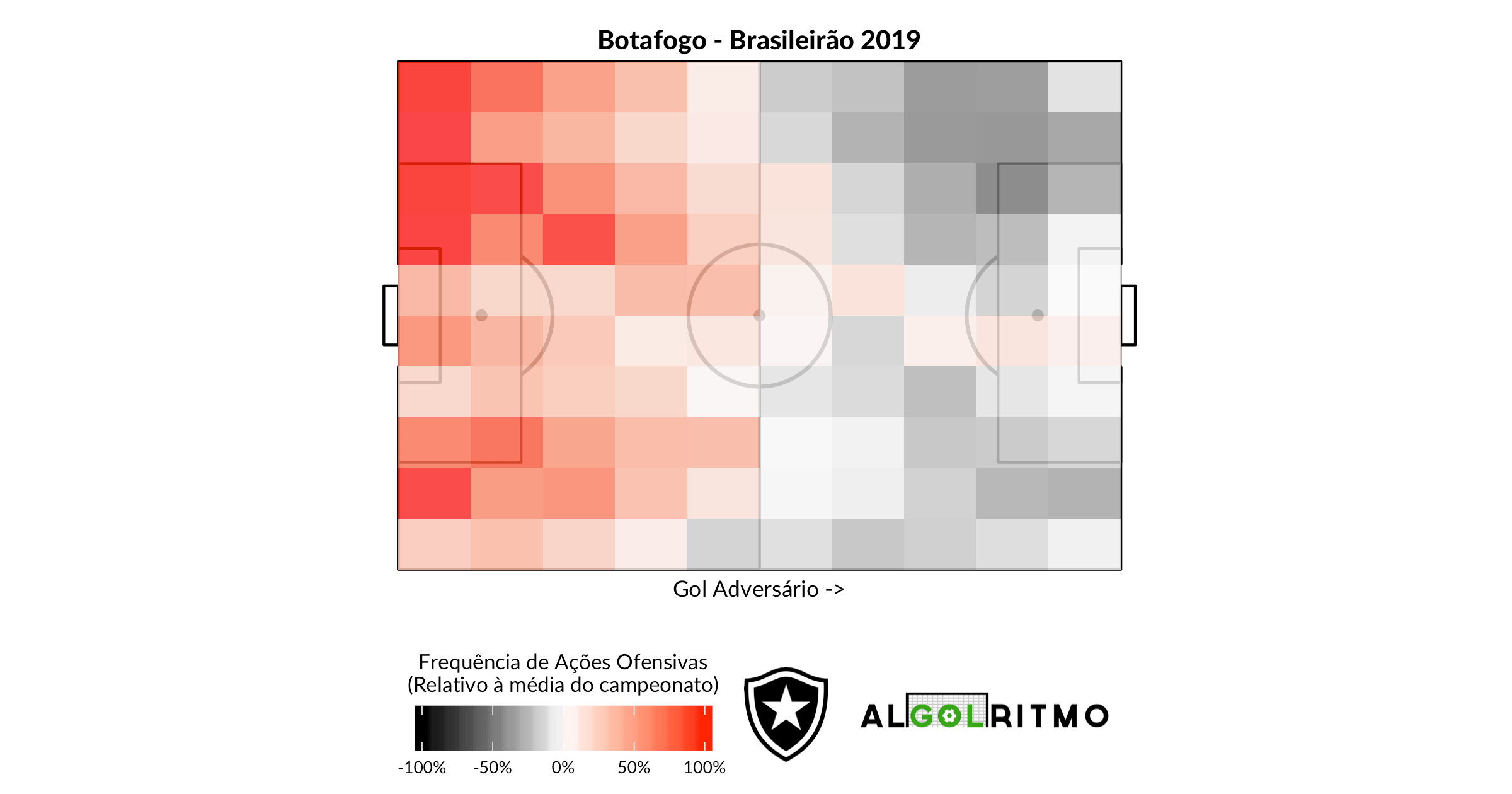
Botafogo is one of the teams with the most “defensive” possession in the league. We see an enormous “hot” patch in defence and a large “cold” area in attack. Several midfielders can hold the ball (Cícero, JP, Bochecha) but there are few options to penetrate the opposition’s half.
Ceará
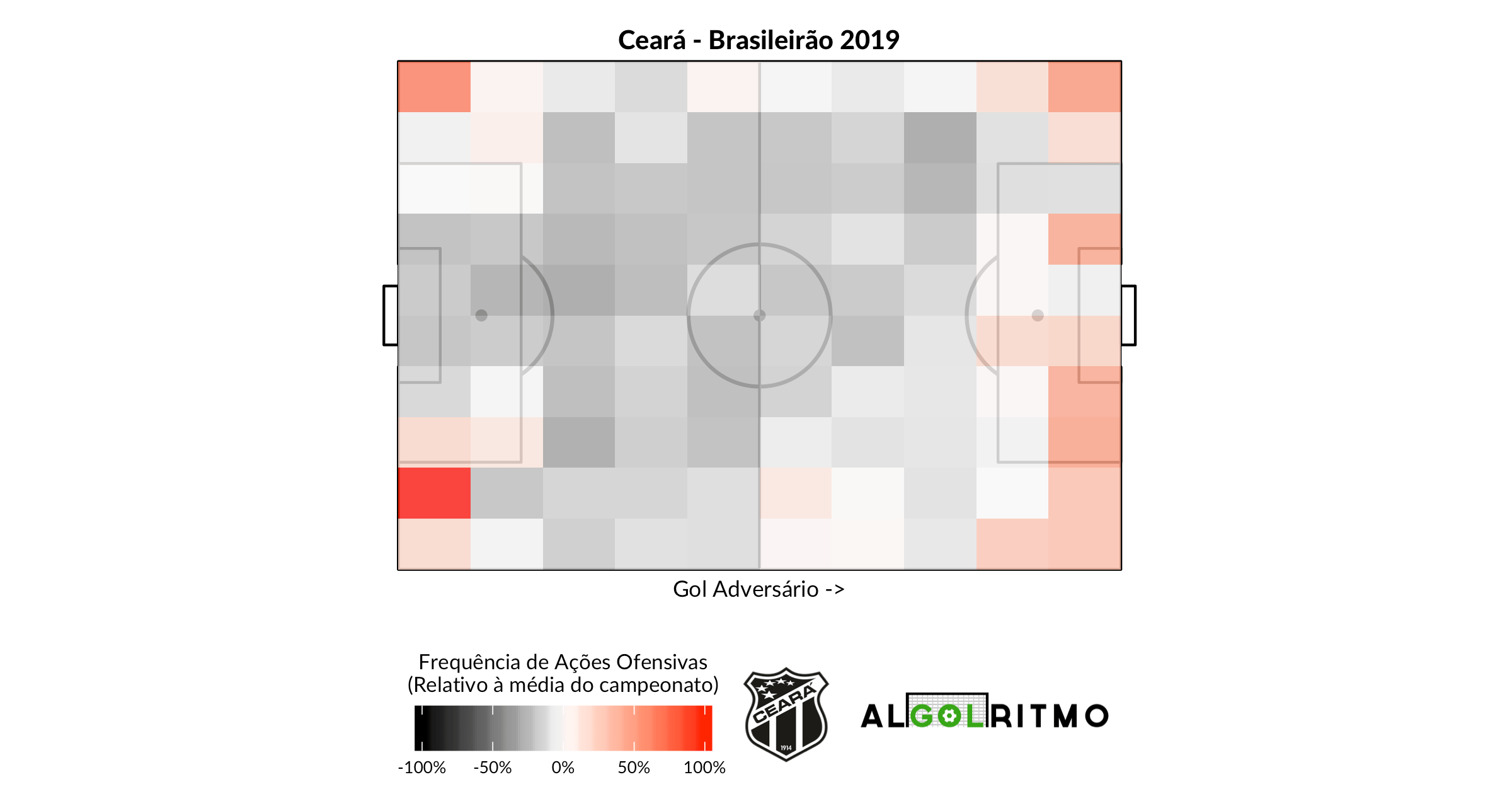
Ceará is an interesting team. They are one of the teams that shoots most in the Brasileirão but do not exchange many passes to build their play. Also note the red patches near the corners of the pitch — the team wins many corners.
Chapecoense
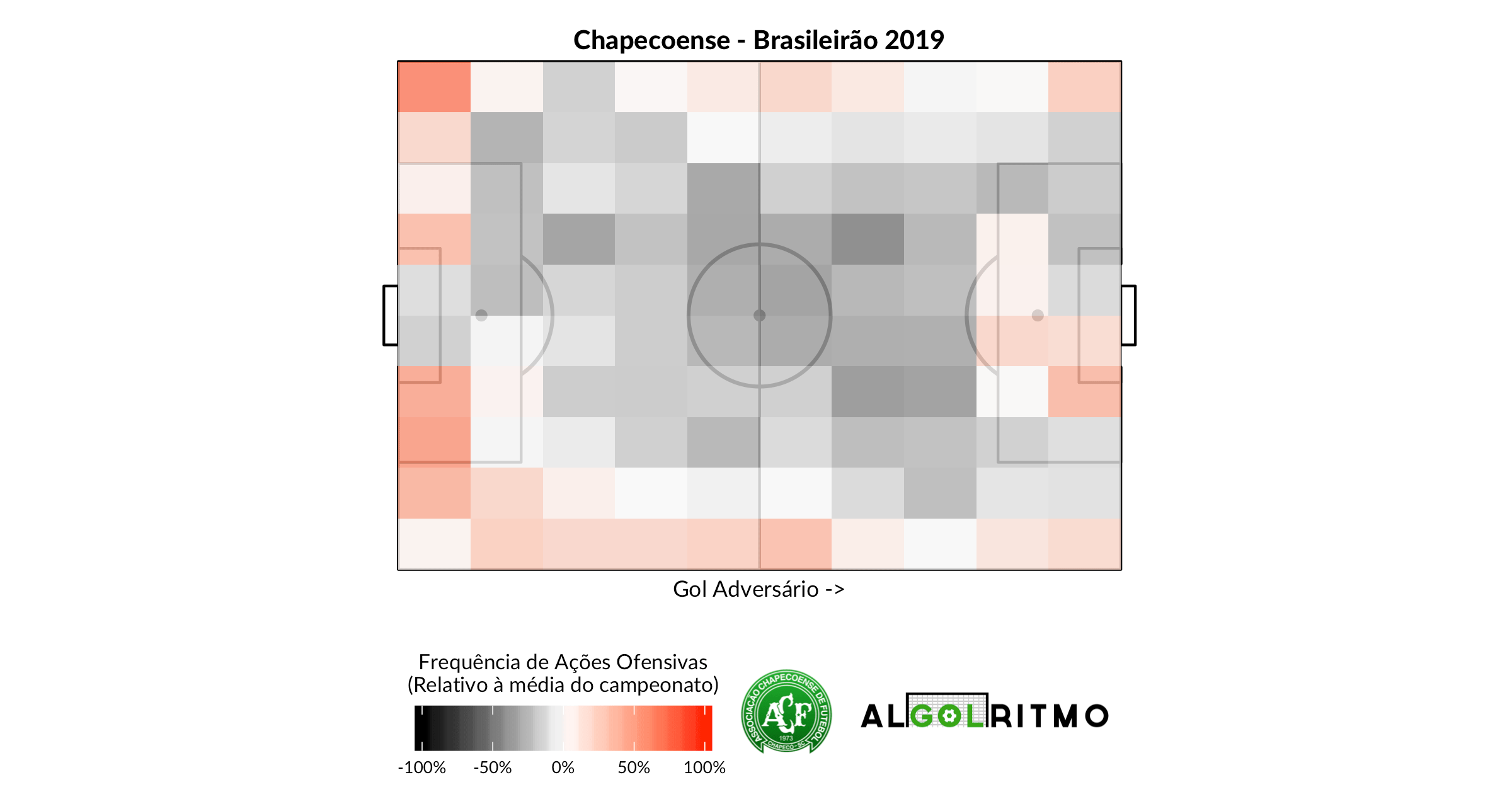
Chapecoense struggles to have the ball in midfield and frequently looks to exploit possession down the right side. We can also see Everaldo’s influence (the team’s main offensive threat) with the red patch inside the box.
Corinthians
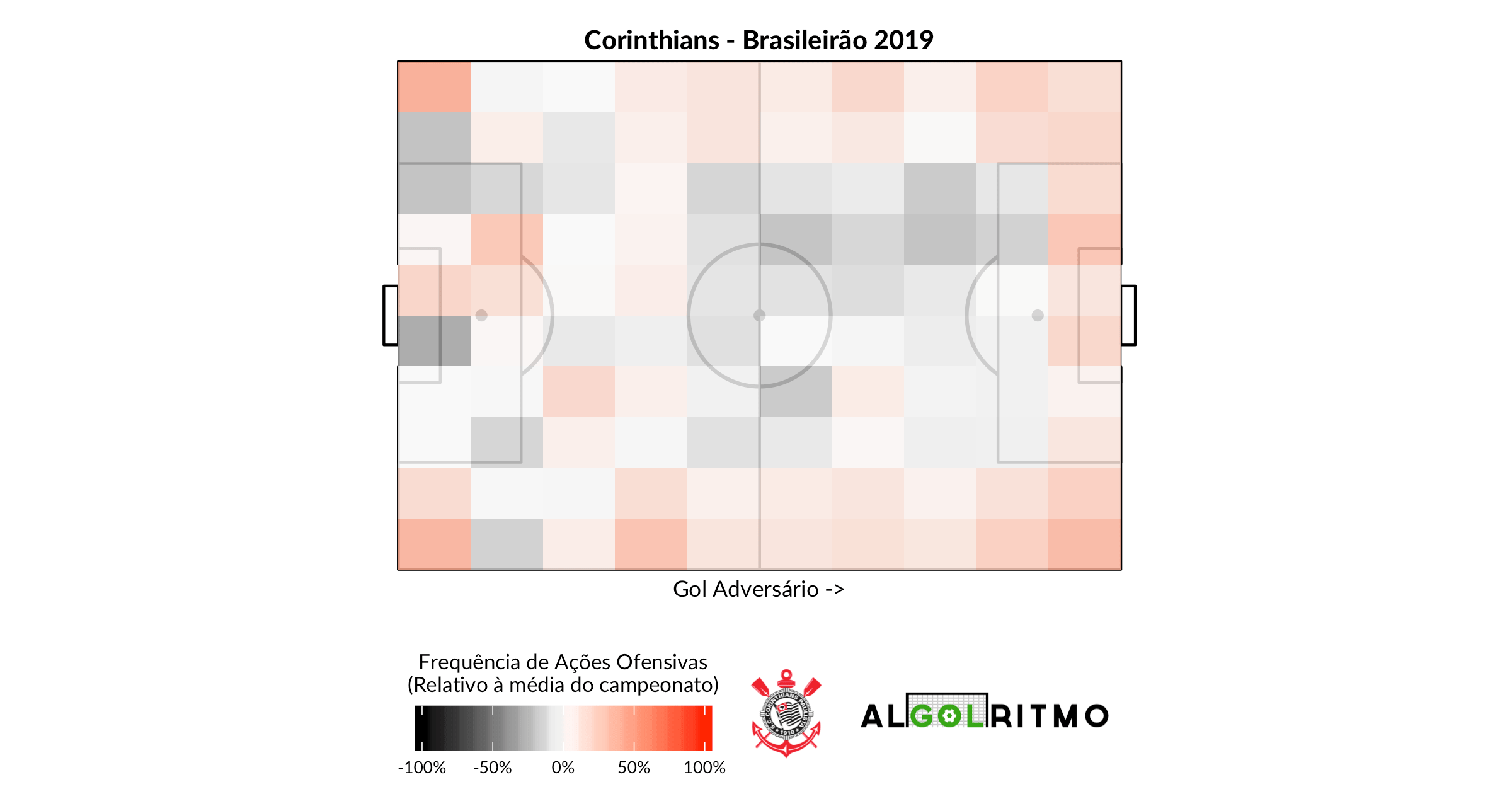
Corinthians builds attacks down the flanks through “attacking trios”. Pedrinho + Fagner + Jr Urso usually appear on the right, while Clayson + Avelar + Sornoza (or Vital) attack down the left. The middle of the pitch often ends up empty.
Cruzeiro
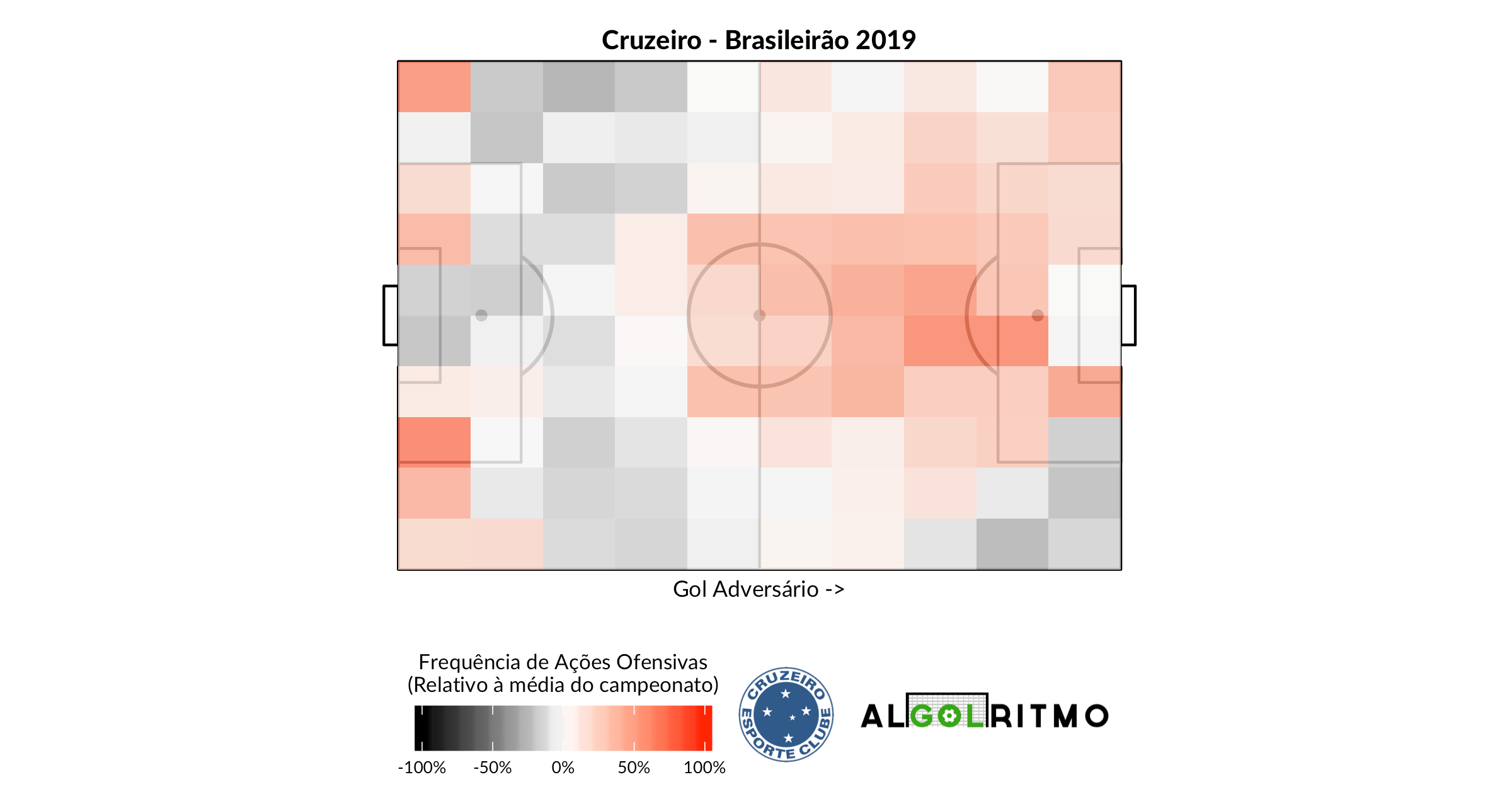
Cruzeiro is one of the few teams that can exploit the centre of the pitch, but for much of the season has failed to translate that offensive possession into chances. Thiago Neves and Robinho are two of the main players responsible for this central build-up.
CSA
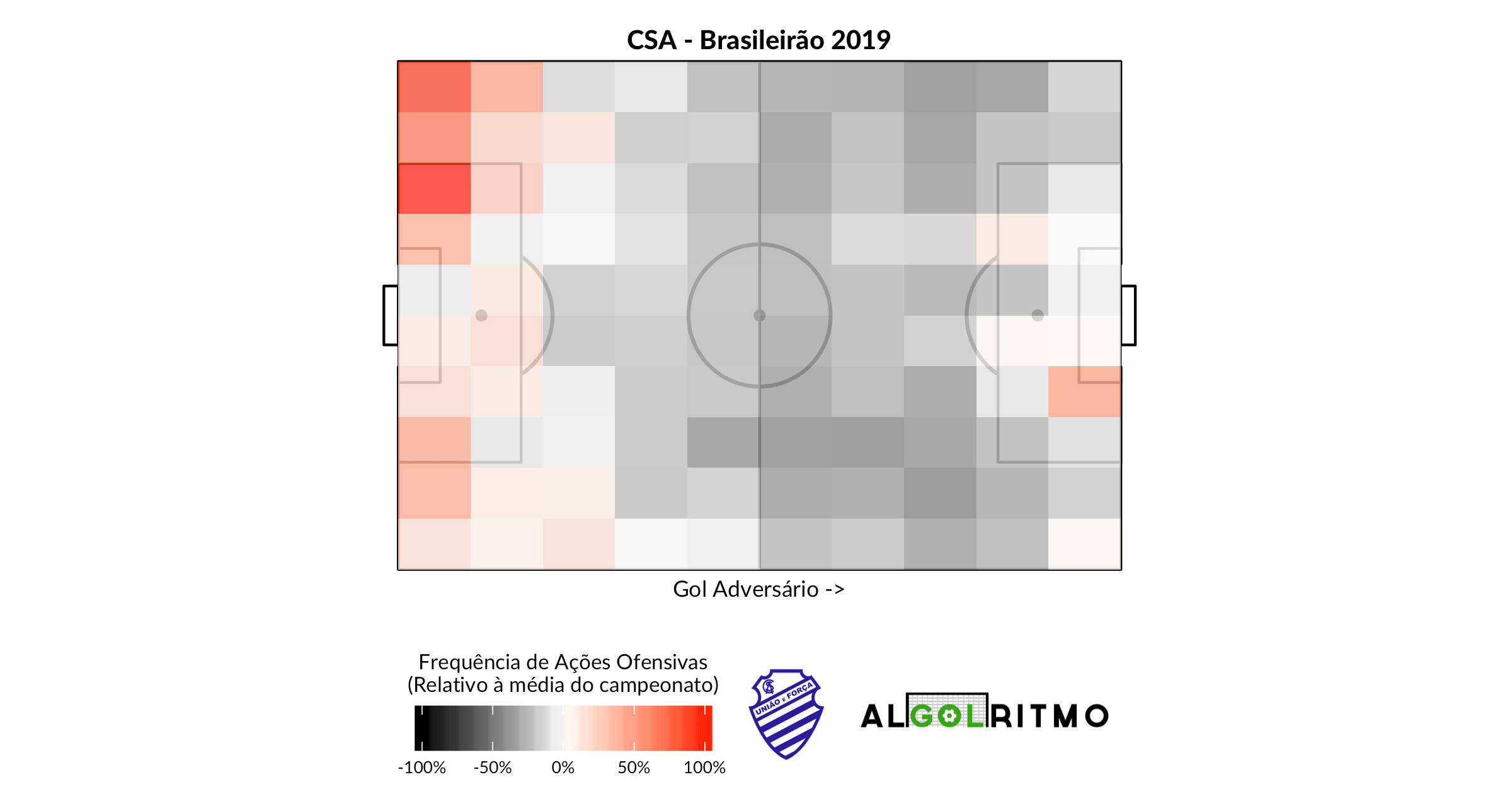
CSA is often pressed by opponents and has the ball frequently in their own defensive third. The team often looks for a more direct game and has managed some interesting results. It remains to be seen whether that will be enough to escape relegation.
Flamengo
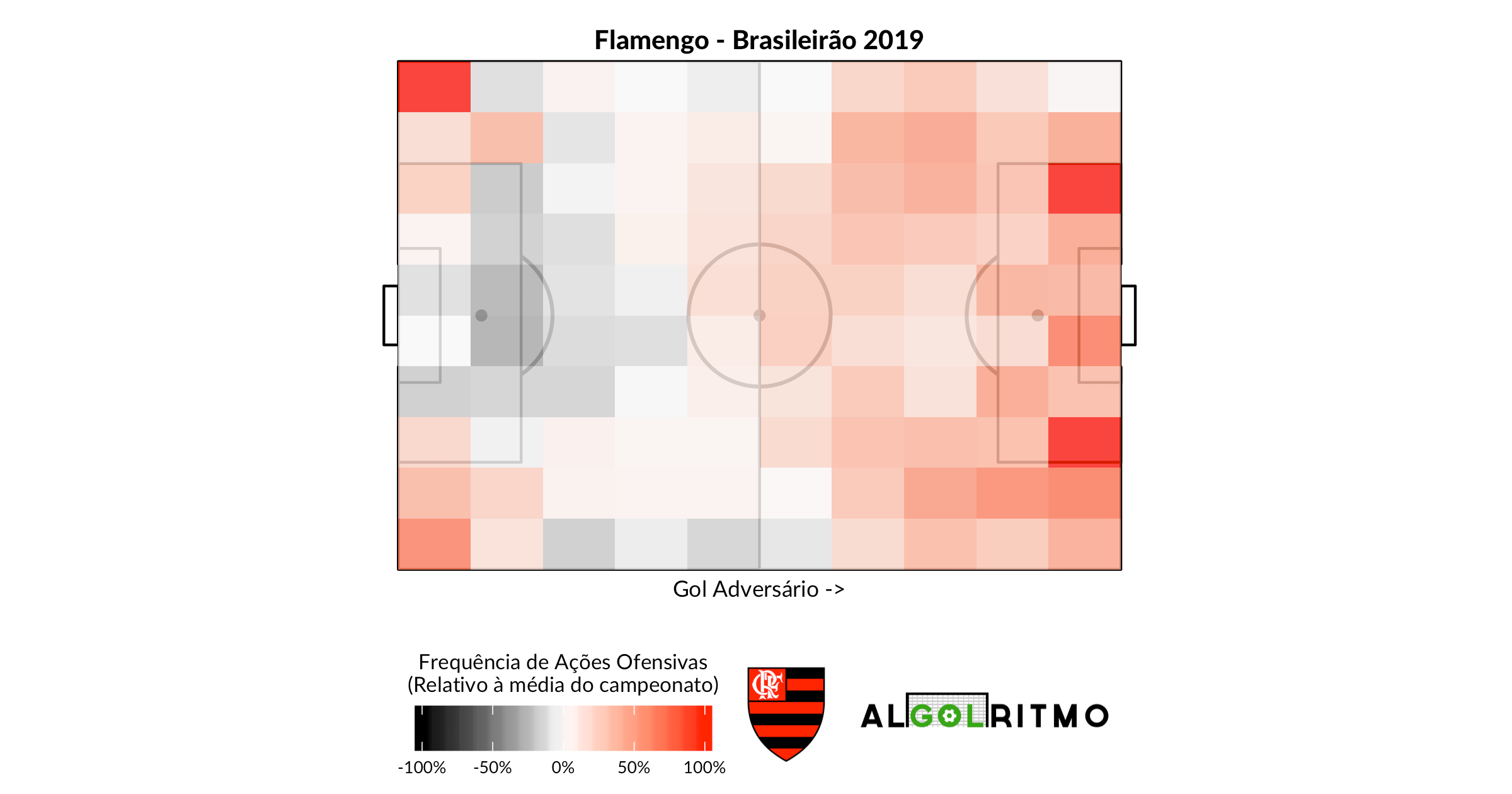
Flamengo is the most intense team in attack in this Brasileirão. They are always present and pressing in the opposition’s half. It is interesting to see that the team has two very “hot” and dangerous quadrants inside the opposing box where many chances are created.
Fluminense
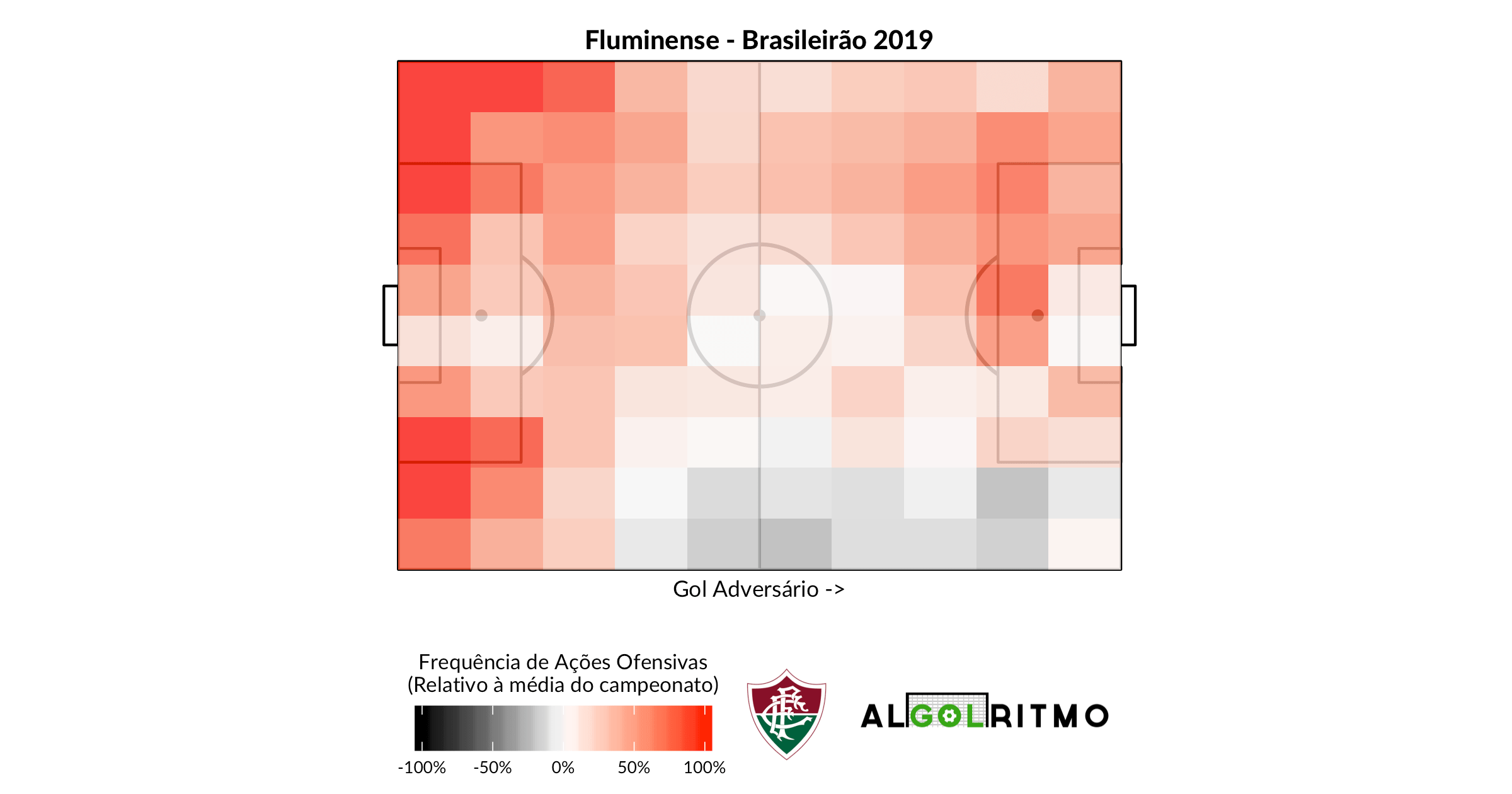
In Fluminense’s heat map we can still see traces of the matches under Fernando Diniz. The team has the ball heavily in almost every sector and tries to build from the back through short passing. Flu’s left side is very active, especially with Caio Henrique.
Fortaleza
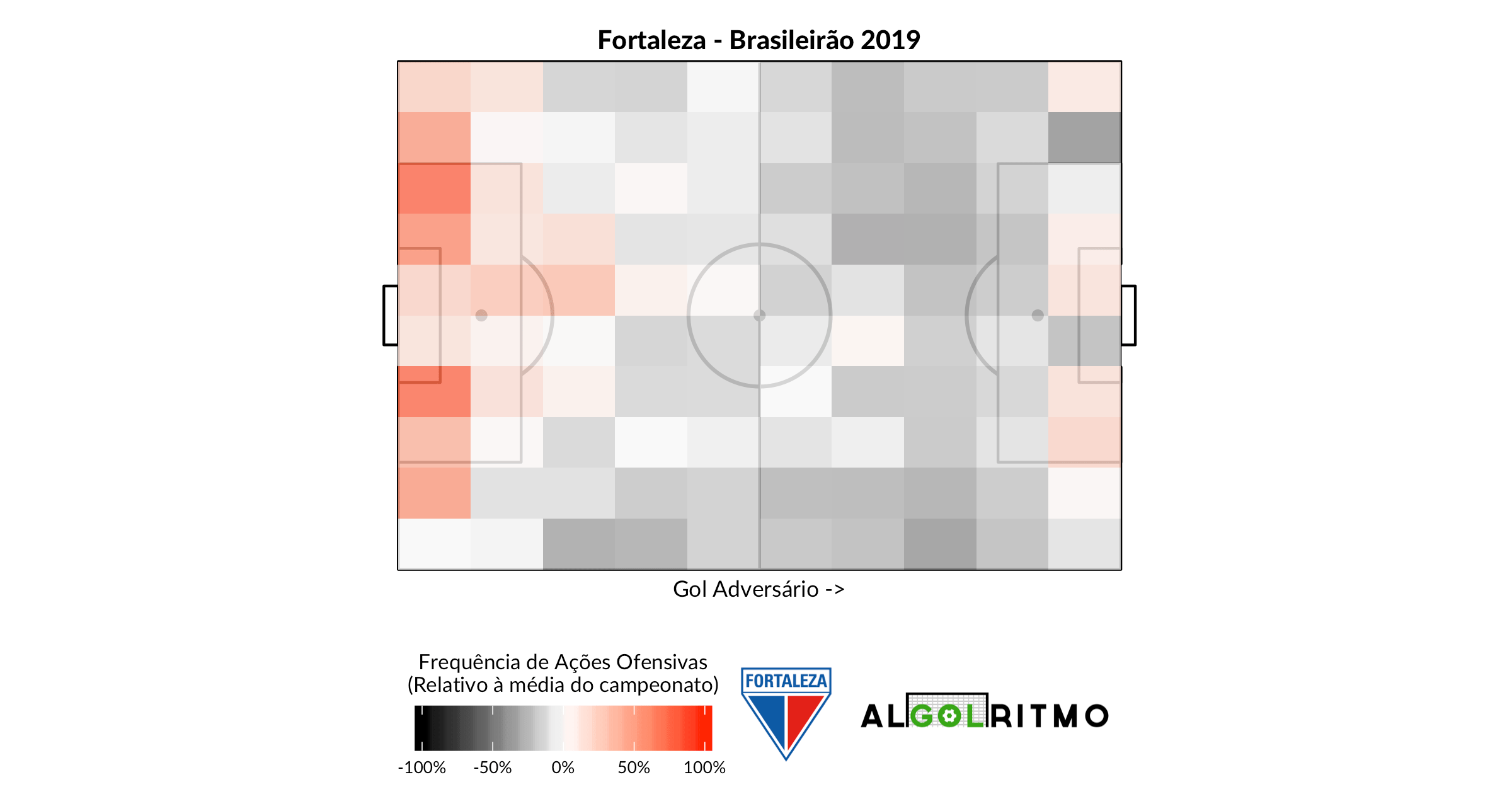
Fortaleza seeks a direct style of play. The team has little possession and tries to attack quickly. In attack, the wingers (Edinho, Osvaldo, or Romarinho) and the centre-forward (WP) always try to finish moves rapidly. Very little action in midfield.
Goiás
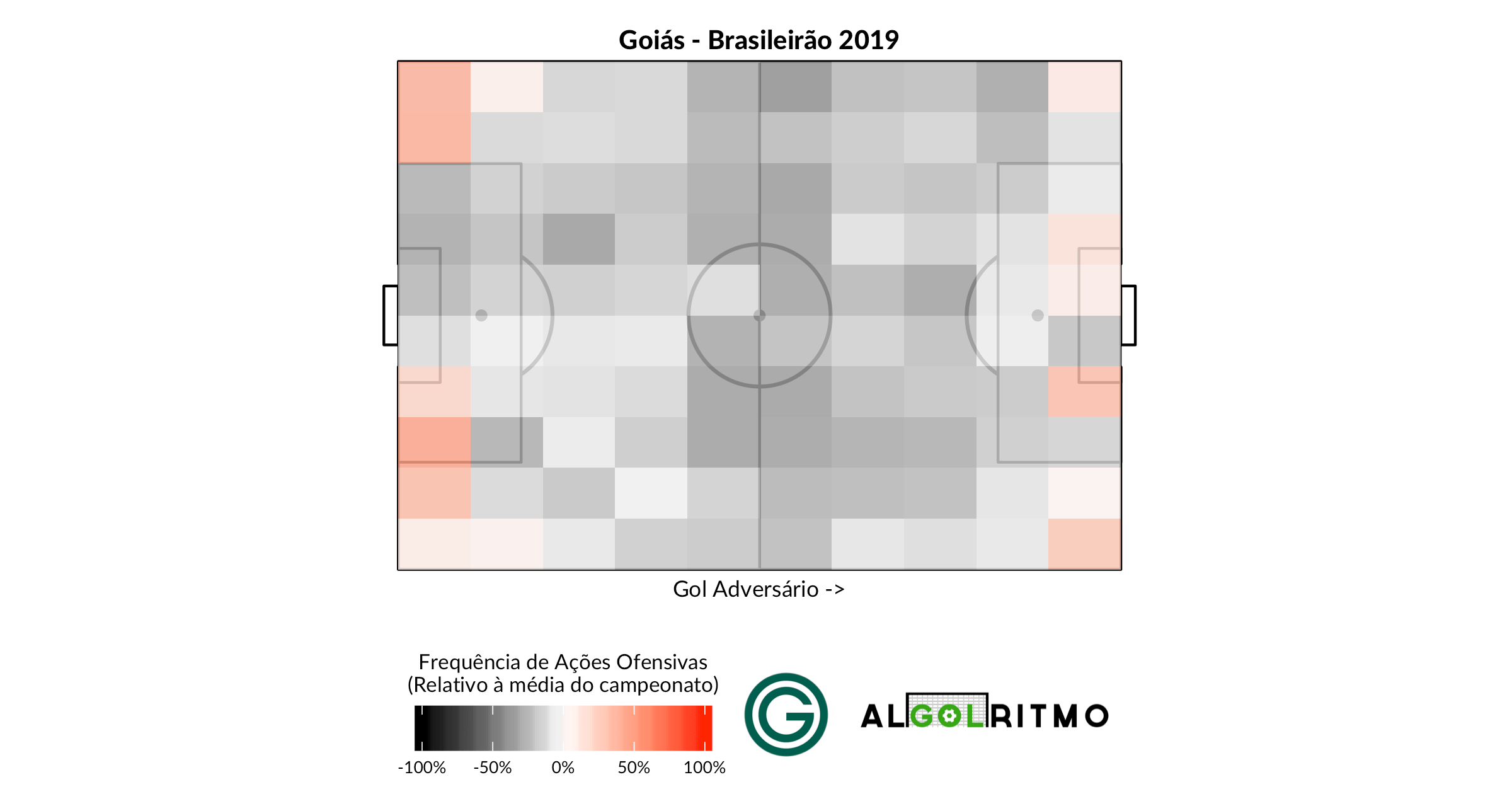
Goiás may be the best example of direct play in this league (practised by many teams this season). The team does not seek to have the ball and work moves, as illustrated by the large grey patch in the heat map. Goiás’s idea is to finish moves quickly.
Grêmio
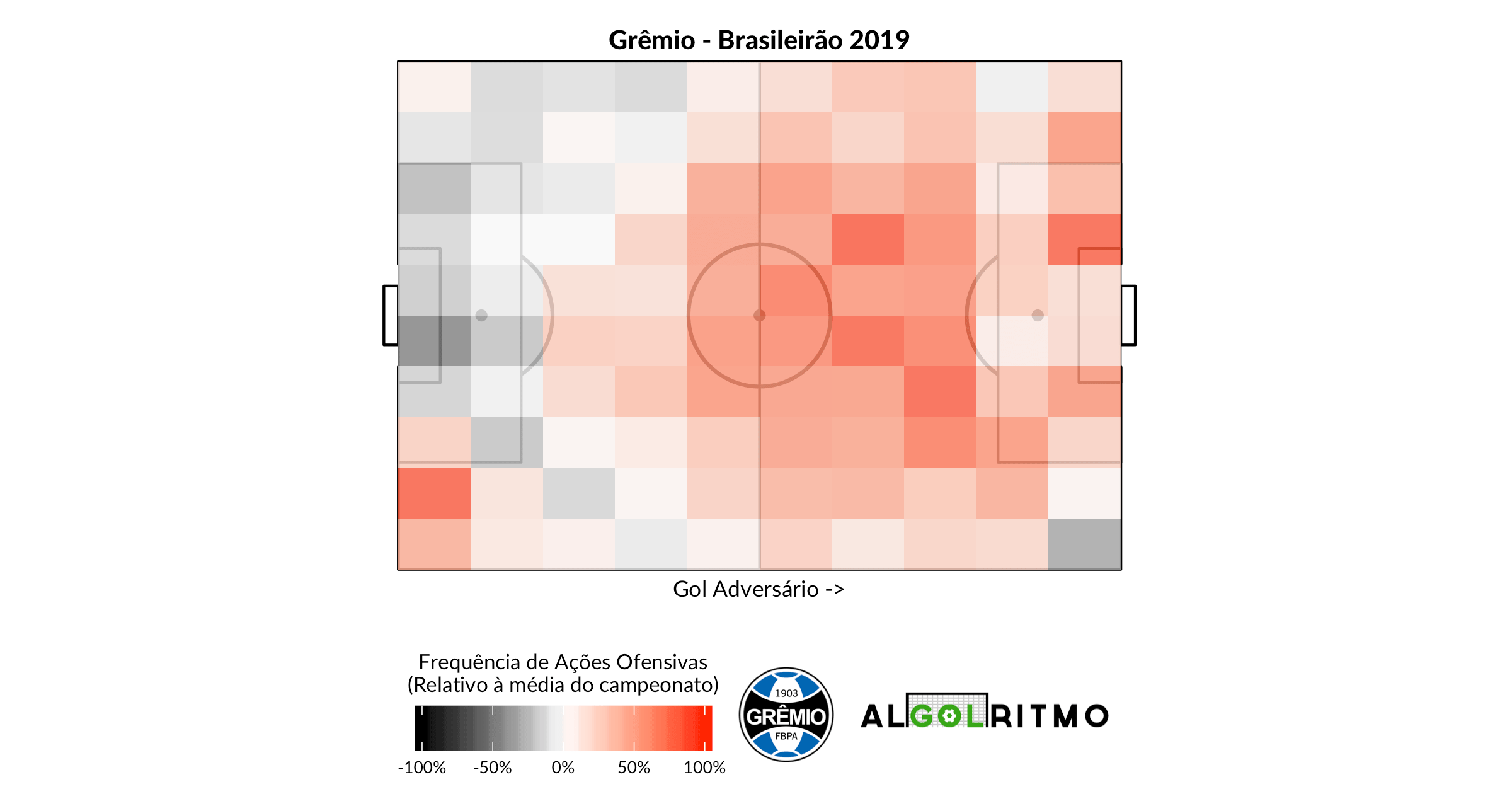
Grêmio has managed to dominate midfield in recent years, and the heat map confirms this. The team seems to have a school of technically gifted holding midfielders, with players such as Maicon, Artur, and Matheus Henrique. The team tends to exchange many passes and work their moves carefully.
Internacional
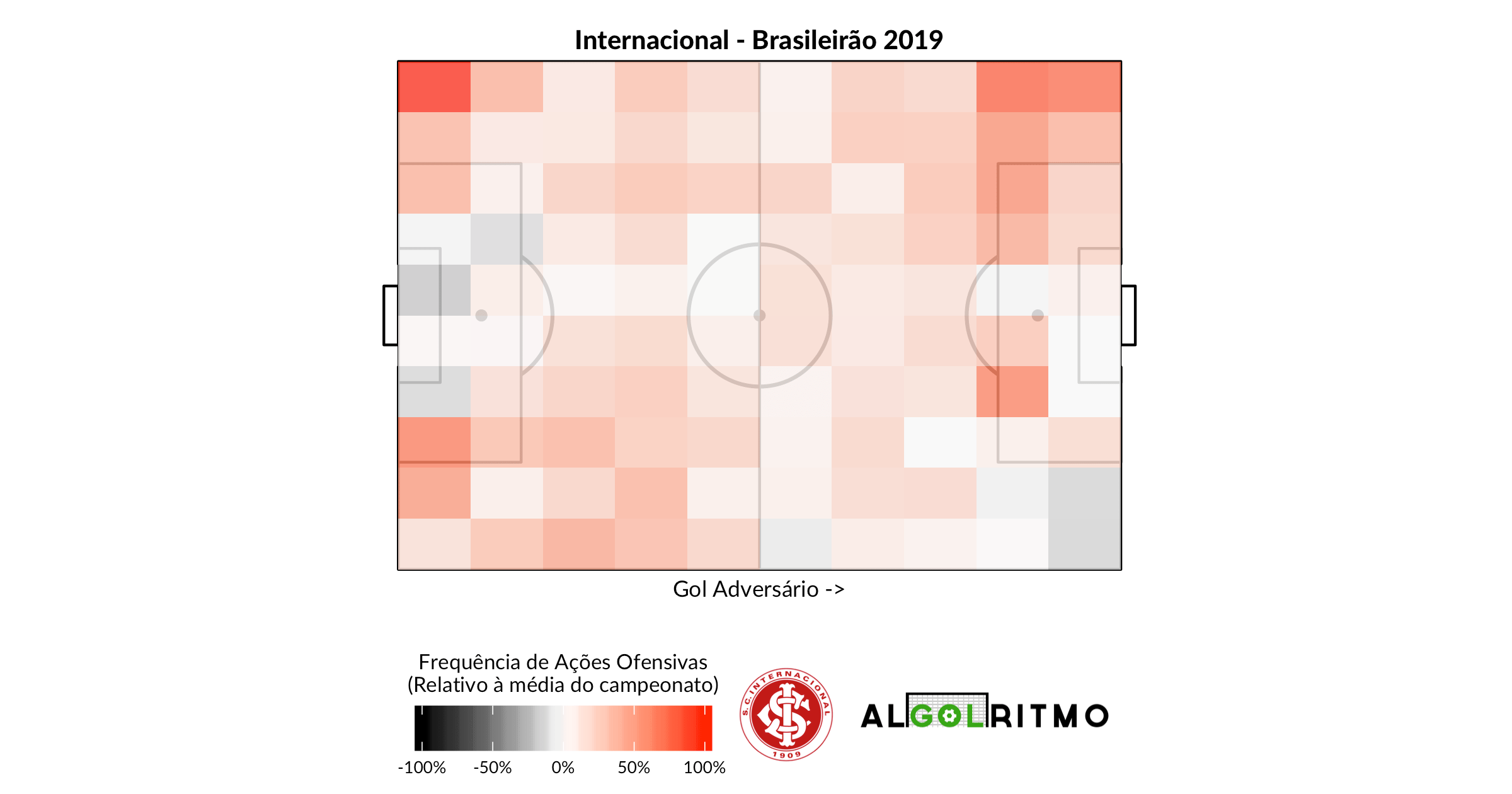
Internacional attacks more down the left, where Patrick is usually present. Overall, the team has slightly more possession than the league average. Inside the box we can see some strong red patches due to Guerrero’s involvement and Edenílson’s runs from deep.
Palmeiras
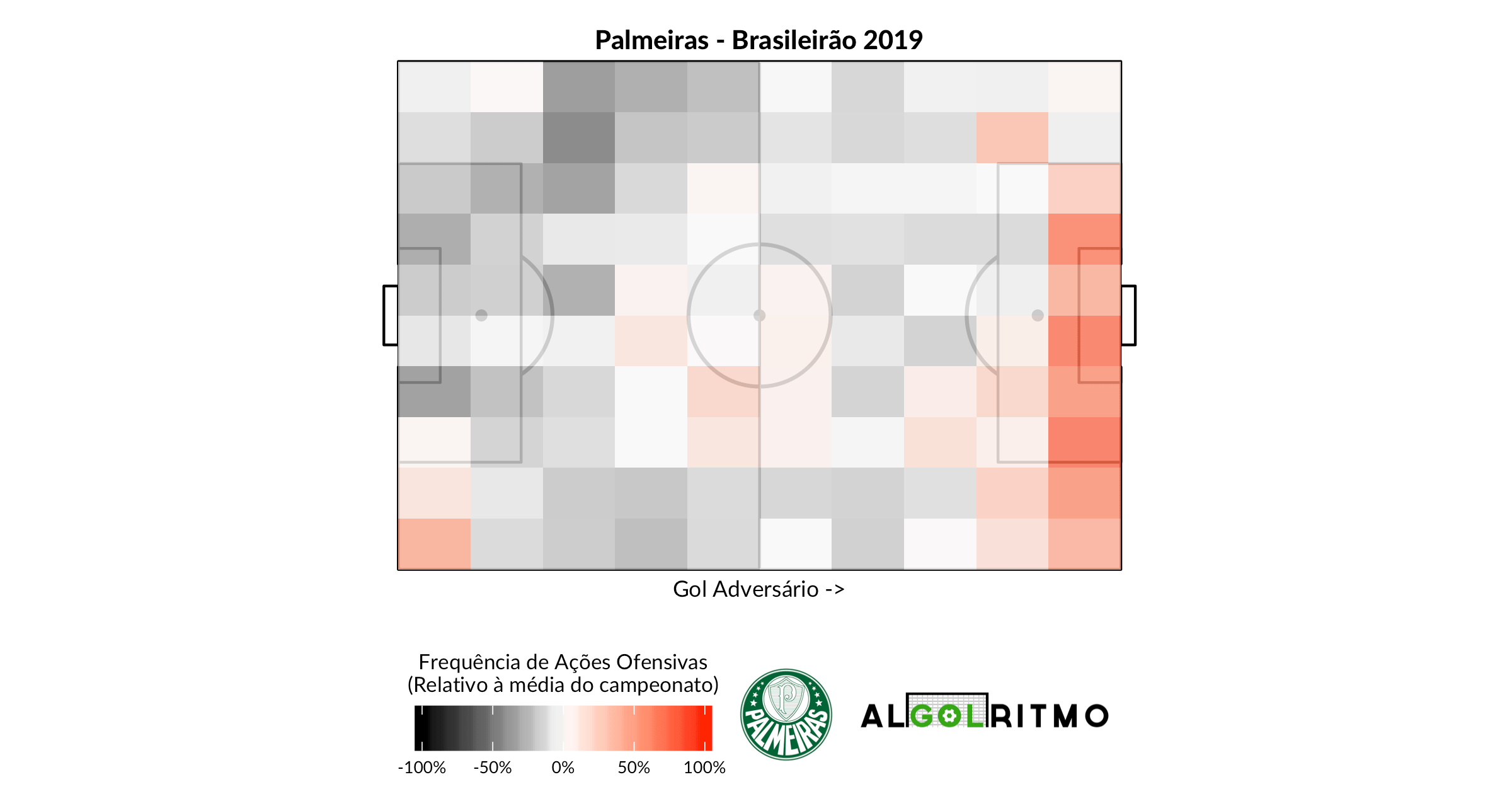
Palmeiras is another great example of efficient direct football. The team barely has the ball, especially in midfield. When Palmeiras does have possession, they always look for balls played in behind (especially to Dudu or Deyverson) to get forward quickly.
Santos
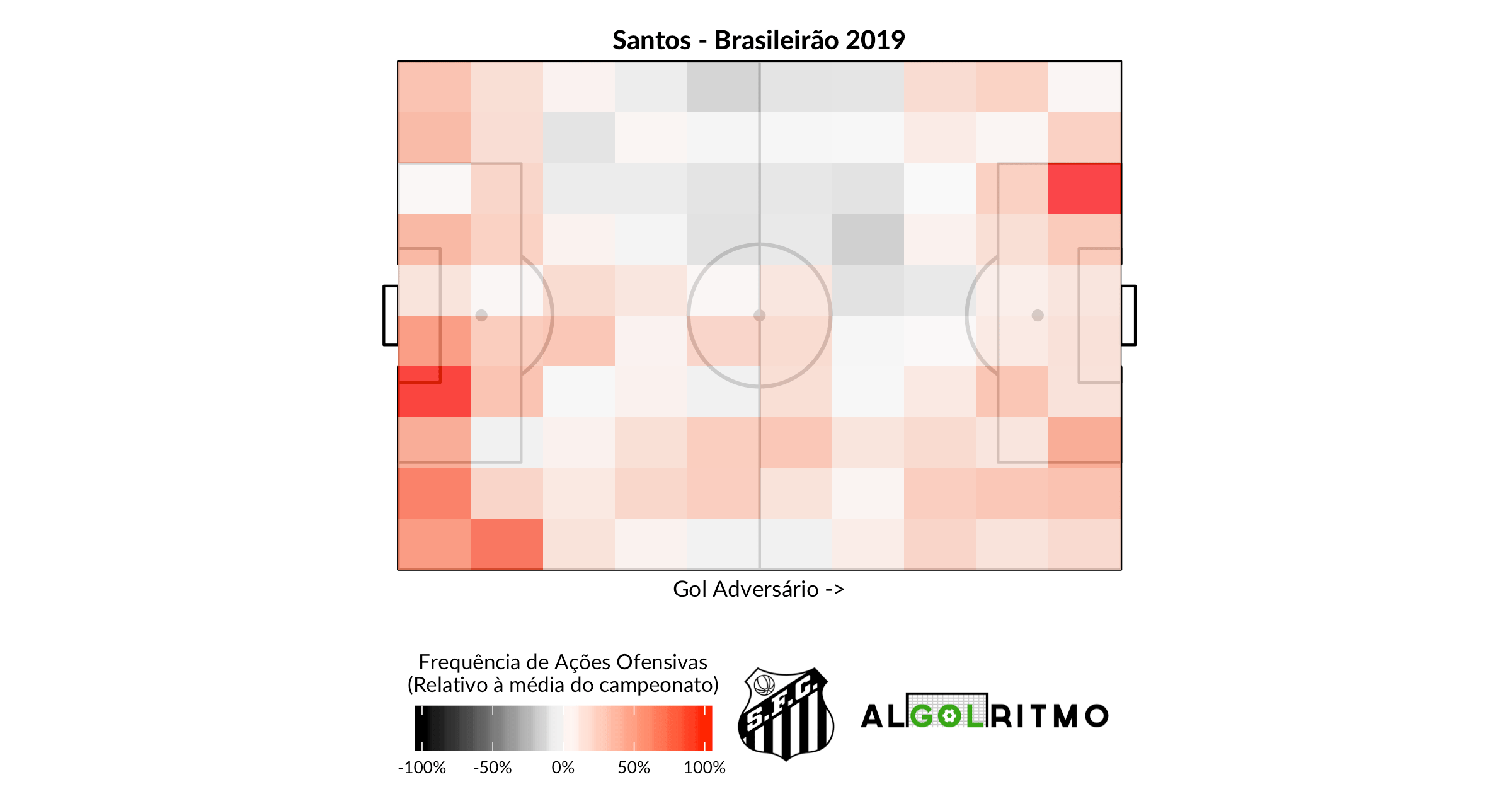
Santos works the ball more down the right side (compared to the league average), where Sánchez operates. The Uruguayan is one of the team’s main creators and is often a magnet for the ball. On the left wing we can see a hot zone, set alight by Soteldo’s contributions.
São Paulo
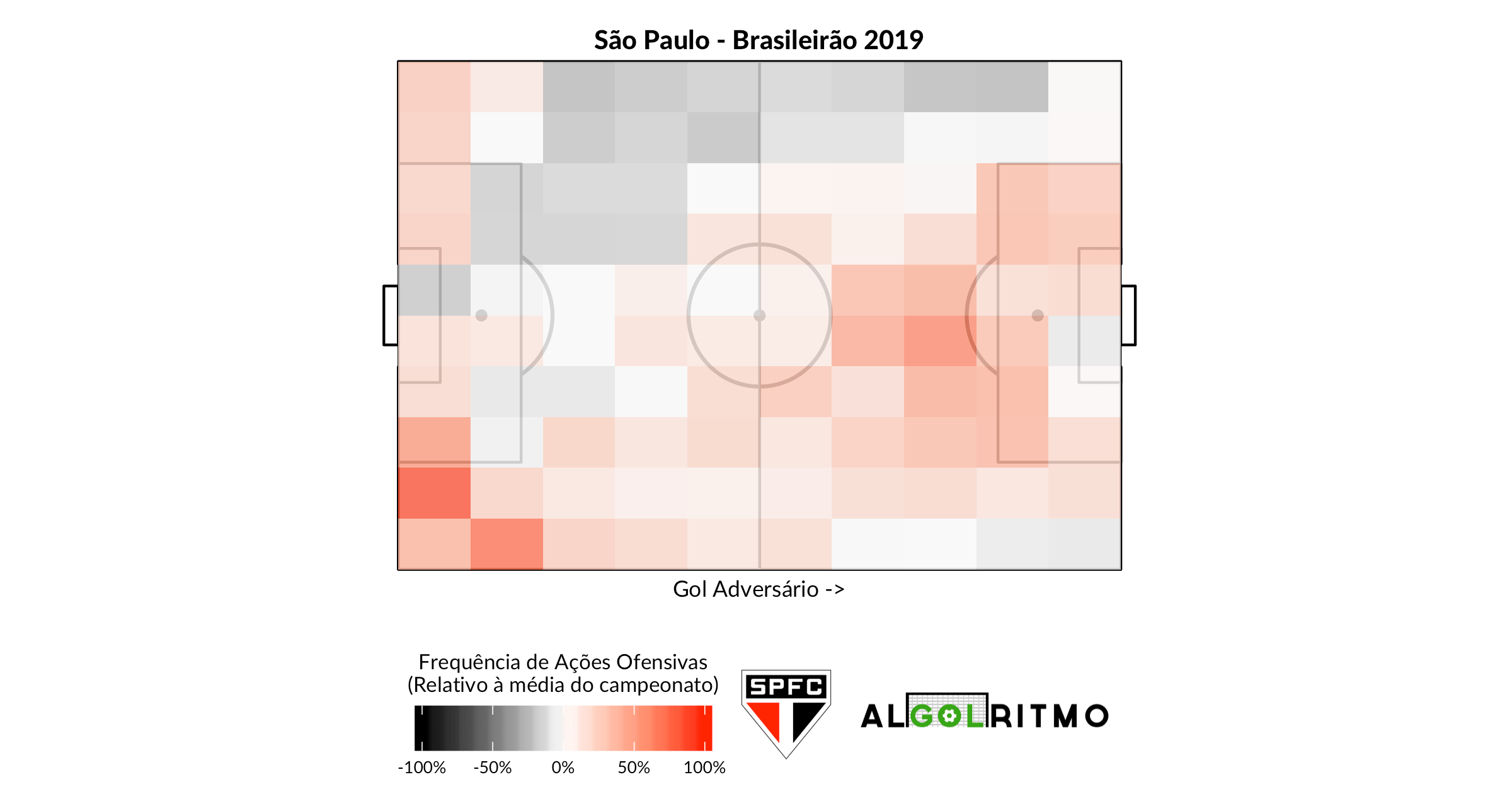
São Paulo builds many moves down the right side, especially with Antony, Dani Alves, and Juanfran (or Igor Vinícius). However, the team rarely exploits the wide areas and generally “funnels” play towards the centre of the pitch.
Vasco
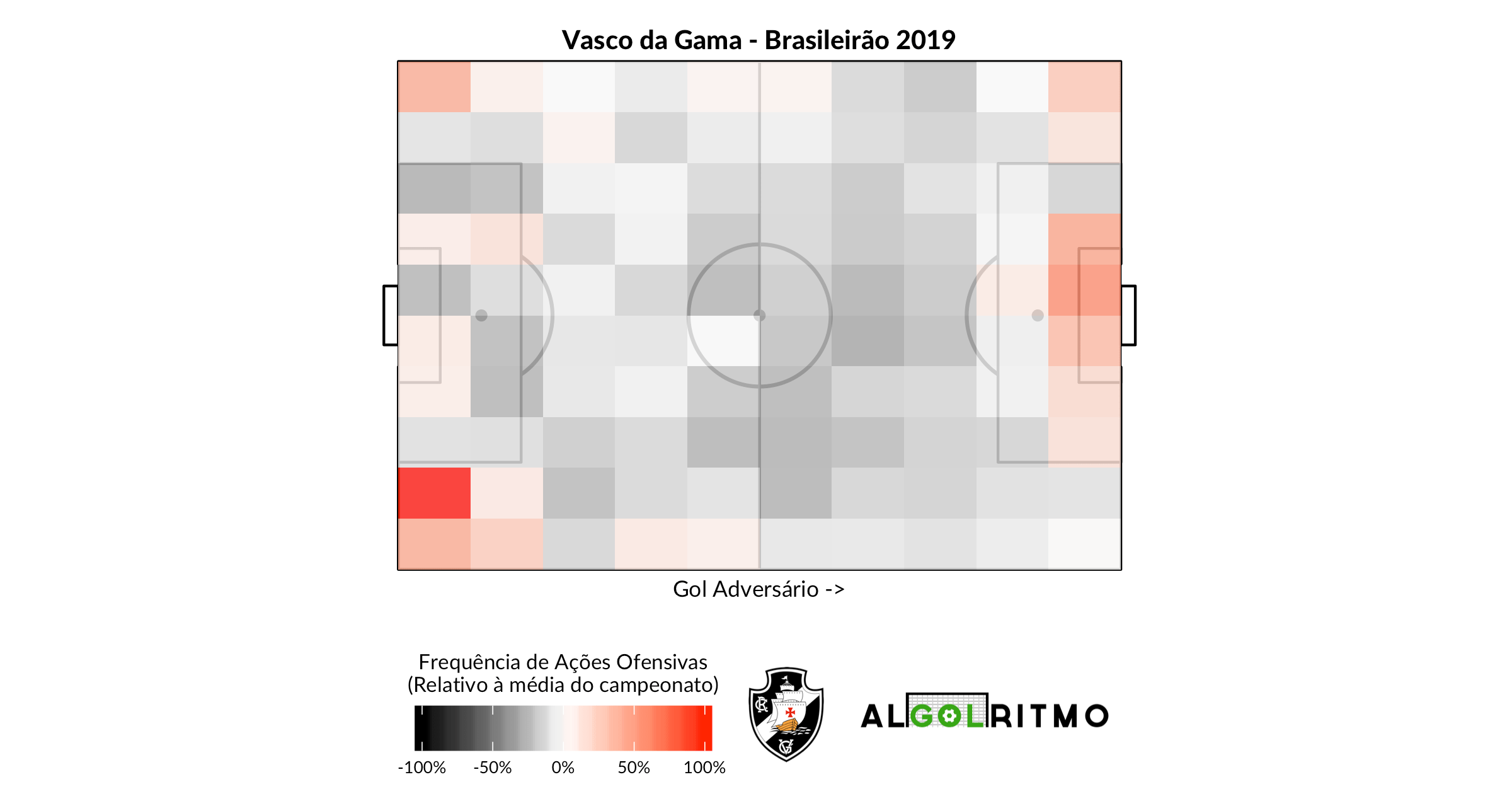
Vasco da Gama do not have much possession, but have managed some interesting offensive output. The team has been exploiting the pace of Rossi, T Magno, and Marrony to finish moves quickly. In addition, set pieces with D Barcelos and Y Pikachu are also interesting weapons.